
Bankers have been criticised for not passing the benefits of rate cuts

Former RBI governor Raghuram Rajan on Monday said the central bank will have to raise interest rates to tame inflation and the hikes need not be considered by politicians and bureaucrats as some "anti-national" activity. Known for his frank views, Rajan also said it was important to remember that the "war against inflation" is never over. "Inflation is up in India. At some point, the RBI will have to raise rates, like the rest of the world is doing," he said in a LinkedIn post.

Reserve Bank of India chief Bimal Jalan said on Friday he was not considering a cut in the short-term repo rate, but added he was in favour of a soft monetary policy bias.\n\n\n\n

Since January this year, RBI has cut the repo rate - at which it lends to commercial banks -- to a gross of 1.25 per cent.

'Banks are being encouraged to lend instead of parking their resources with the RBI and earn risk-free interest income,' points out Tamal Bandyopadhyay.

Housing sales are likely to be hit, especially in affordable and mid-income categories, following the RBI's decision to hike repo rate, according to real estate developers and consultants. However, the impact of RBI's decision to raise the benchmark lending rate by 50 basis points to 5.40 per cent is expected to be for a short term, they added. This is the third consecutive rate hike after a 40 basis points and 50 basis points increase in May and June, respectively.
Rajan sees banks passing on the benefit of lower rates regime to customers.

The Reserve Bank of India's (RBI's) state of the economy report observed that any durable alignment of headline retail inflation with the target of 4 per cent could recommence in the second half of FY25 and sustain until numbers closer to the target are seen during the course of FY26, dashing hopes of any reduction in the policy repo rate in the current financial year. The report, authored by RBI staffers, including Deputy Governor in charge of monetary policy Michael Patra, said though headline numbers may fall in July and August due to base effect, it is likely to reverse in September.

The cost of deposits is on the rise, but banks can't raise interest rate on close to 60% of their loan books, points out Tamal Bandyopadhyay.
The Reserve Bank has raised short-term borrowing rate (reverse repo) by 0.50 percentage points and lending rate (repo) by 0.25 percentage points.
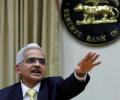
CII suggested the policy measures required to ease the tight liquidity situation by cutting CRR by at least 50 basis points.
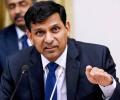
Rajan said the central bank has used up all its "space available" to cut interest rates

While most borrowers calculate the gain they stand to make from switching to a lower interest rate, they often fail to take into account all the costs.

The government on Thursday kept interest rates unchanged on small savings schemes, including NSC and PPF, for the second quarter of 2022-23 amid high inflation and rising interest rate. The interest rate on small savings schemes has not been revised since the first quarter of 2020-21. Public Provident Fund (PPF) and National Savings Certificate (NSC) will continue to have an annual interest rate of 7.1 per cent and 6.8 per cent, respectively, in the second quarter of this fiscal.

From the 30-share pack, Adani Port, Bharti Airtel, Asian Paints, IndusInd Bank, Bajaj Finserv, Reliance Industries, Infosys, UltraTech Cement, HDFC Bank, HCL Technologies and ICICI Bank were among the laggards. Tata Motors, Axis Bank, Maruti, Larsen & Toubro, ITC and Tata Steel were among the gainers.

SBI last reduced its lending rate in January by cutting it by 0.05 per cent.

High frequency indicators, like vehicles sales, air traffic, steel consumption and GST E-way bills, point towards a sequential pickup in momentum of economic activity during the second half of the fiscal 2024-25 and sustain moving forward, RBI Bulletin said on Wednesday. However, a strong dollar, driven by US economic resilience and trade policy pivots, could exacerbate capital outflows from emerging economies, push risk premiums higher, and intensify external vulnerabilities, said an article on 'State of the Economy' published in RBI's February bulletin.

RBI unsure whether to cut rates or not in its next monetary policy.

'Some buyers believe prices may correct in the future.' 'This is unlikely. Many developers are increasing prices amid strong sales and inflationary trends.'

The returns from liquid funds, currently, look better than what savings accounts of leading banks are offering, points out Sarbajeet K Sen.

Indian economy is in a sweet spot, with a mix of solid growth and moderating inflation, Moody's Ratings said, forecasting a 7.2 per cent GDP growth in the 2024 calendar year and 6.6 per cent in the next. In its Global Macro Outlook 2025-26, the rating agency said the global economy has shown remarkable resilience in bouncing back from supply chain disruptions during the pandemic, an energy and food crisis after the Russia-Ukraine war began, high inflation and consequent monetary policy tightening.
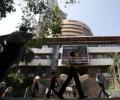
The wider NSE Nifty too ended 21.55 points, or 0.21 per cent down at 10,476.70.
State-run Central Bank of India on Thursday said Reserve Bank of India's credit policy initiative has increased pressure on interest rates.

With Deputy Governor Viral Acharya and another member Chetan Ghate voting for a status quo, RBI governor Shaktikanta Das and three others outvoted them for reduction in repo rate to 6.25 per cent from the existing 6.50 per cent.
A day after the Reserve Bank kept key interest rates unchanged, the International Monetary Fund on Wednesday said further interest rate increases are needed in India with monetary conditions still accommodative and credit expanding strongly.
.jpg)
Bank has cited trend of global easing and weak growth

The Reserve Bank of India (RBI) has given HDFC Bank six months to migrate HDFC's home loan customers to external benchmark linked lending rate (EBLR), top sources in the bank told Business Standard. Almost half of HDFC's 5.4 million customers are home loan customers. It is mandatory for banks to link retail loans and loans to micro, medium and small enterprises to an external benchmark. Non-banking financial companies do not have such a mandate.

India's manufacturing sector growth eased slightly in July, on softer increases in new orders and output, while cost pressures and demand strength led to the steepest increase in selling prices since October 2013, a monthly survey said on Thursday. The seasonally adjusted HSBC India Manufacturing Purchasing Managers' Index (PMI) moderated slightly from 58.3 in June to 58.1 in July.

With this lending rate reduction, the bank has lowered 40 bps so far this fiscal year in five successive rate cuts beginning April.
Bankers see upward pressure on interest rates after the Reserve Bank raised two key short-term rates in the busy season credit policy of October.
Soon after RBI's decision, three banks namely Yes Bank, HDFC Bank and Union Bank reduced the benchmark prime lending rate by 50 basis point each. SBI had last month slashed benchmark prime lending rate by 75 basis points to 13 per cent.

Most say a rate cut could come in RBI's June policy.

The nation's largest lender State Bank of India today said it will not hike its lending rates immediately but will wait for further signals from the Reserve Bank's forthcoming annual monetary policy.

Among the 30 Sensex firms, Asian Paints, Infosys, JSW Steel, UltraTech Cement, Power Grid, Larsen & Toubro, HCL Technologies and Tata Steel were the biggest laggards. Tata Motors, HDFC Bank, Bharti Airtel, ITC, IndusInd Bank and Axis Bank were the gainers.

The banking system's liquidity slipped into deficit for the first time in the current financial year (2023-24) due to the imposition of the Incremental Cash Reserve Ratio (I-CRR) for banks and outflows from goods and services tax (GST) payments, according to dealers. Reserve Bank of India (RBI) data shows it injected Rs 23,644 crore on August 21. The last time liquidity was in deficit was on March 27, when the RBI injected Rs 45,575 crore.
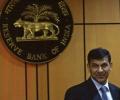
After two rate hikes in less than six weeks aimed at curbing inflation, RBI Governor Raghuam Rajan on Wednesday said the central bank may be done with interest rate increases as their impact on the economy is assessed.

The repo rate could be reduced by 50 bps in the current year.

'Banks will continue to increase FD rates to attract more deposits and meet the increasing demand for credit.'
